
Plenary Speakers 2026
Plenary Speaker Ⅰ
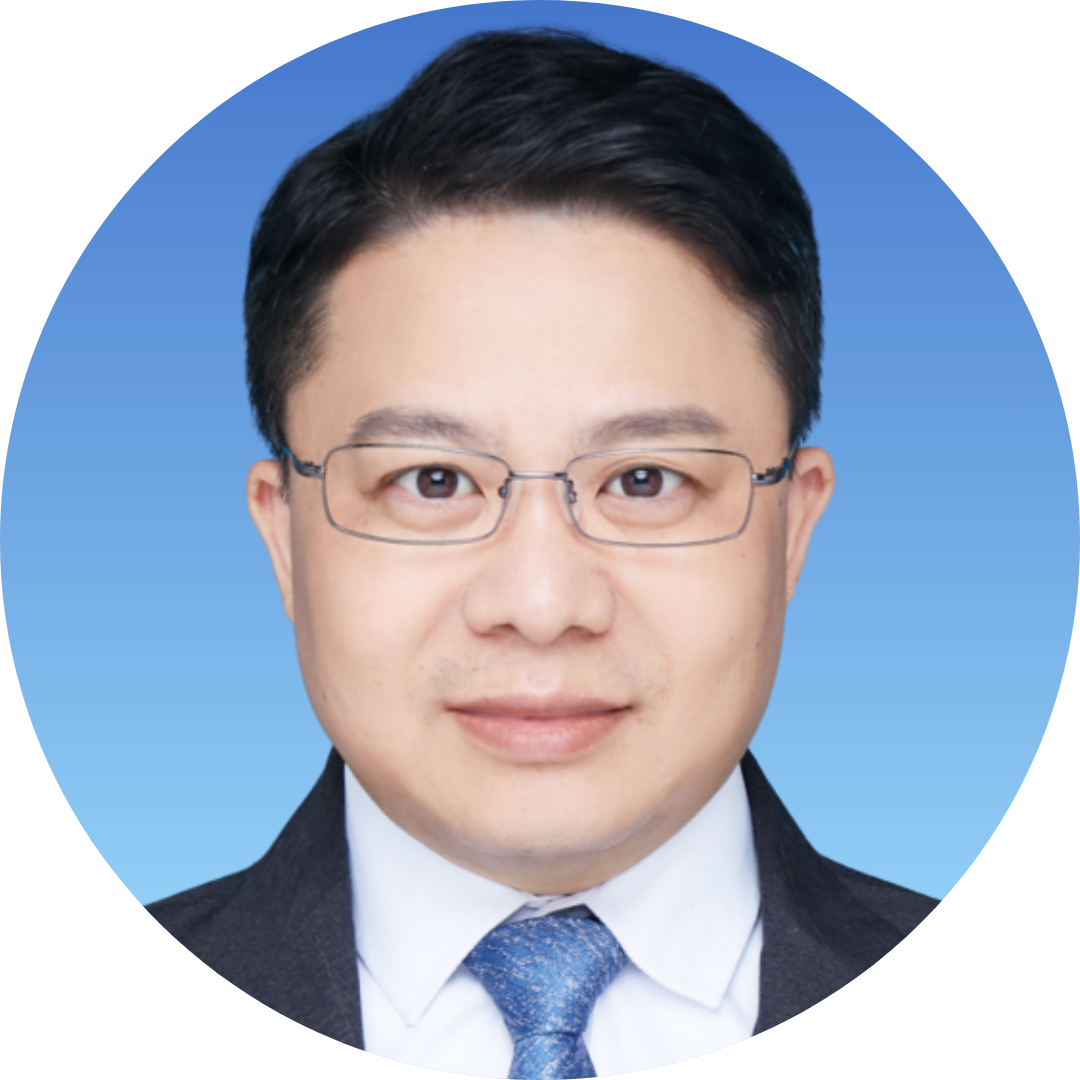
Zhichun Li
Huazhong University of Science and Technology, China
Brief Introduction: 李志纯,华中科技大学管理学院教授、博士生导师。教育部长江学者特聘教授,国家杰青、优青。主要研究领域包括交通运输管理、区域与城市经济等。主持了国家杰青、优青、重点项目,国家社科基金重大项目、教育部新世纪优秀人才项目、全国百篇优博专项基金、霍英东青年教师基金等科研项目。迄今在Journal of Urban Economics,Journal of Regional Science,Regional Science and Urban Economics,Transportation Research Part B等发表SCI/SSCI论文100余篇。目前担任SCI/SSCI刊物Transport Policy, Transportmetrica B副主编,以及Transportation Research Part E,International Journal of Sustainable Transportation 编委。入选爱思唯尔(Elsevier)2020-2025中国高被引学者,及2025全球前2%科学家榜单。
Speech Title: Autonomous Vehicles, Urban Deployment, and Welfare Effects
Abstract: This paper provides a theoretical analysis of the effects of autonomous vehicles (AVs) on the spatial structures of future cities. We consider two types of AVs, private AVs (PAVs) and shared AVs (SAVs). We assume that AVs have a lower marginal travel cost than human-driven traditional vehicles (TVs) due to additional utility caused by free activities in AVs, and PAVs have a lower marginal travel cost than SAVs due to better privacy, convenience, and comfort. Two urban spatial models are presented and compared: one focusing on a city with only TVs and the other on a city with mixed PAVs and SAVs. Both models account for land competition among firm production, household residence, and parking. The optimal residential lot size and the optimal SAV market share are determined, with an objective of maximizing social welfare. The finding shows that introducing AVs may lead the city size to expand or shrink, and both the social welfare and the total congestion cost to increase or decrease, depending on the maturity degree of AV technologies and the SAV market share.
Plenary Speaker Ⅱ

Zhiyuan Liu
Southeast University, China
Brief Introduction: Zhi-Yuan Liu is a Distinguished Professor and Doctoral Supervisor at Southeast University. He has been recognized as a recipient of the National Natural Science Foundation of China’s Excellent Young Scientists Fund (Young Elite), Distinguished Young Scholars Fund, and Young Overseas High-Level Talents Program.
He received his bachelor’s degree in Transportation Engineering from Southeast University and his Ph.D. in Civil Engineering from the National University of Singapore. He subsequently joined Monash University in Australia as an Assistant Professor before returning full-time to Southeast University in 2015 as a Professor and Doctoral Supervisor in the School of Transportation. From December 2017 to January 2018, he was a Visiting Scholar in the Department of Mathematics at the University of Melbourne.
From May 2019 to July 2023, he served as Associate Dean of the School of Transportation. From July 2023 to March 2025, he served as Associate Dean of the National Elite Engineering School. He currently serves as Secretary of the Party Committee of the School of Statistics and Data Science and Director of the Research Center for Complex Transportation Networks. He also serves as Secretary-General of the Transportation Engineering Discipline Evaluation Group under the Academic Degrees Committee of the State Council.
His research focuses primarily on transportation big data analytics and modeling, transportation network planning and management, and related areas. He has published more than 200 papers as first or corresponding author in leading SCI-indexed journals, including Nature Sustainability, INFORMS Journal on Computing, IEEE Transactions on Knowledge and Data Engineering, Transportation Science, and Transportation Research Part B, Part C, and Part E. His publications have received more than 10,000 citations, including 13 ESI Highly Cited Papers.
For five consecutive years, he has been recognized as an Elsevier Highly Cited Chinese Scholar and among the World’s Top 2% Scientists. He currently serves as an Area Editor of the internationally renowned transportation journal Transportation Research Part C, Associate Editor of Transportation Research Part E, and Executive Editor-in-Chief of Multimodal Transportation, an international journal published by Elsevier, as its sole Executive Editor-in-Chief.
He has led teams that received the First Prize of the Ministry of Education’s Outstanding Scientific Research Achievement Award, the First Prize of the China Intelligent Transportation Association Science and Technology Progress Award, and the First Prize of the China Highway Society Science and Technology Progress Award. He is also the sole recipient of two Huawei “Spark Award” prizes in the Huawei Open Innovation Competition.
Since 2016, he has received 21 awards in domestic and international big-data algorithm competitions, consistently ranking among the top three. These achievements include a championship and a runner-up finish in the KDD Cup, widely regarded as the “World Cup of big-data competitions,” as well as a championship in IJCAI and a second-place finish in NeurIPS.
Speech Title: Fundamental Theories, Methodologies, and Technical Architecture for Integrated Macroscopic–Microscopic Traffic Simulation
Abstract: Urban transportation networks constitute a typical nonlinear complex system, and the essence of transportation management lies in dynamically regulating the balance between transportation supply and travel demand. Over the years, quantitative analysis of supply–demand conditions has evolved into two largely disconnected modeling paradigms. Macroscopic models possess analytically tractable mathematical structures and are capable of capturing system-level network patterns, but they lack detailed representations of individual behaviors. Microscopic models, in contrast, can represent individual driving behaviors, such as car-following and lane-changing, in considerable detail, but are difficult to characterize analytically and remain constrained by computational scalability. Consequently, large-scale supply–demand computation for realistic urban transportation networks has yet to be effectively addressed.
This report presents the fundamental theories, methodologies, and technical architecture underlying integrated macroscopic–microscopic traffic simulation. At the modeling level, an embedded modeling framework is developed in which macroscopic and microscopic simulations are coupled through iterative feedback. A consistent network-conversion methodology that preserves traffic constraints, an edge-based shortest-path algorithm, and a road impedance function consistent across macroscopic and microscopic models are developed to ensure consistency between the two modeling paradigms in both network representation and mathematical formulation.
At the parameter-calibration level, an automated calibration framework is established for ultra-high-dimensional simulation parameters. The framework considers three categories of parameters—behavioral, demand-related, and environmental—and integrates a surrogate model embedded with traffic assignment mechanisms with an improved Bayesian optimization algorithm. Validation against field-measured data demonstrates that the simulation error can be reduced to below 10%.
At the computational level, the convex programming formulation of the traffic assignment problem is equivalently reformulated into a mathematically parallelizable structure, breaking through the serial algorithmic paradigm that has persisted for approximately 70 years. On urban networks with more than 50,000 nodes and 8 million travelers, the proposed approach achieves more than two orders of magnitude in computational acceleration. Furthermore, a distributed microscopic simulation paradigm is developed based on optimal network partitioning and graph partitioning methods, achieving more than 20-fold parallel acceleration.
These theoretical and methodological advances provide the foundation for TASP (Transport Agent Simulation Platform), an independently developed integrated macroscopic–microscopic traffic simulation platform.
Plenary Speaker Ⅲ
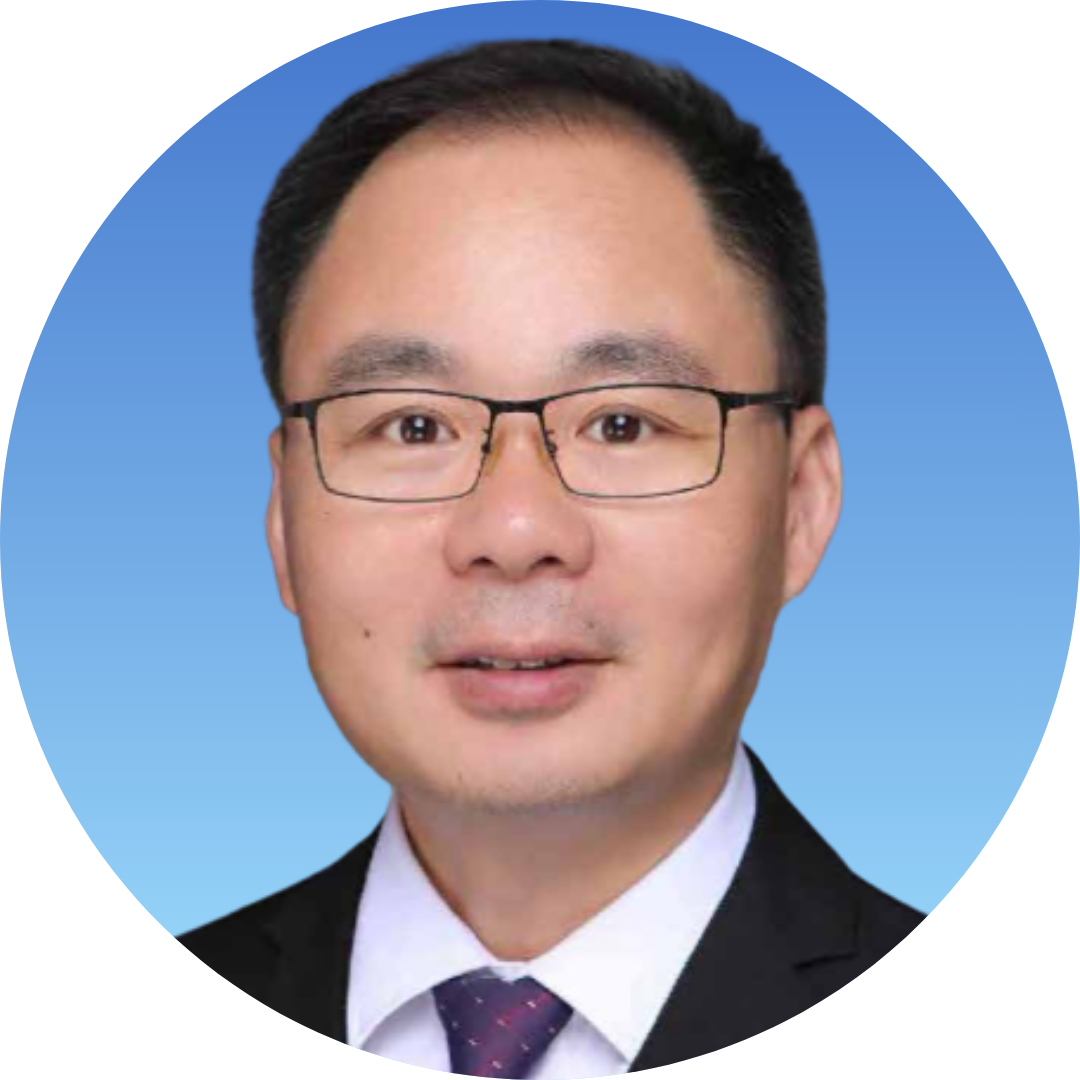
Meng Xu
Beijing Jiaotong University, China
Brief Introduction: Dr. XU Meng is currently a Full Professor of the School of Systems Science at Beijing Jiaotong University (BJTU), and the Institute Director of the Comprehensive Transportation Systems Science. The major portion of his research focuses on innovative urban mobility development, sustainable transportation system, smart city management, transport policy analysis, green transport demand management policies, modeling and analysis of transportation systems, network equilibrium models and solution algorithm development, and large-scale traffic data sets analysis. He was awarded the DAAD Scholarship in 2010, the program for New Century Excellent Talents in University of China in 2011 (issued by the Ministry of Education of China), the EU Marie Curie International Incoming Fellowship in 2012, and the prestigious Excellent Young Scientist Programme in 2014 (funded by the National Natural Science Foundation of China (NSFC)). He is the author or co-author of over 200 articles in refereed journals, book chapters and proceedings, the principle investigator of over 30 projects or funds. He owns over 20 patents/software copyrights involving emerging mobility technologies and intelligent transportation systems. He serves as the Associate Editor of “International journal of urban sciences (IJUS)”, “Frontiers in Future Transportation”, IEEE Intelligent Transportation Systems Society Conference (IEEE ITSC) and IEEE Intelligent Vehicles Symposium (IEEE IV), the Editorial Advisory Board of journals including “Transportation Systems Engineering and Information Technology (TSEIT)”, and “Systems Engineering”. He is the committee of several international academic organizations. His academic opinions and comments have been disseminated by Medias, e.g. CCTV, CETV-1, TVB HK, Valora Analitik Colombia…
Speech Title: Urban Smart Public Transport Sustainable Development under Emerging Development Patterns
Abstract: The development of new technologies brings both opportunities and challenges for the sustainable development of urban smart public transport. On the basis of summarizing the typical characteristics of urban public transport development, the challenges facing urban smart public transport development are identified from six perspectives. Combined with the development practices of smart public transport in typical international and domestic cities, new approaches and new models for the development of urban smart public transport are proposed from six aspects.
Plenary Speaker Ⅳ
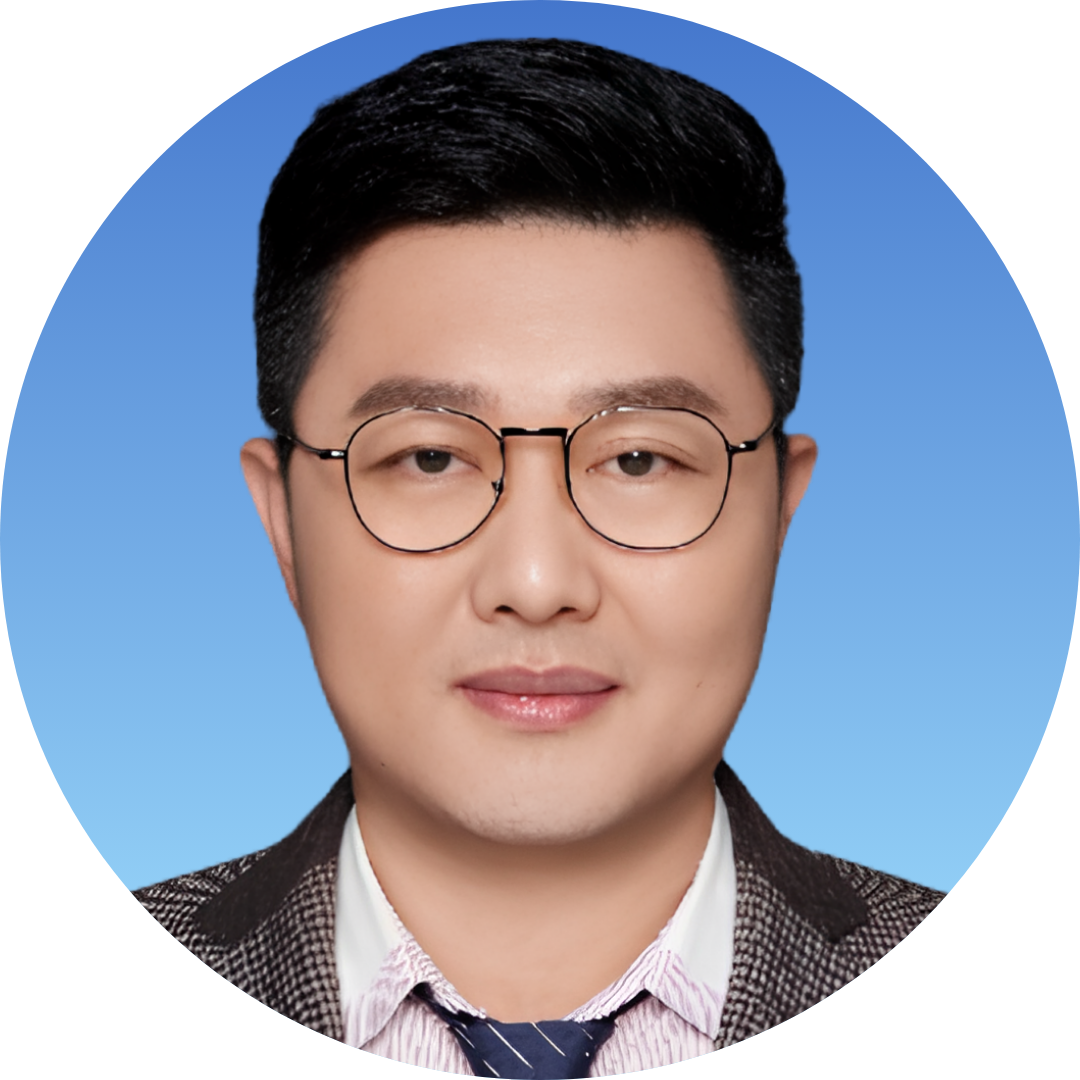
Weiwei Qi
South China University of Technology, China
Brief Introduction: Weiwei Qi is a Professor and Doctoral Supervisor at South China University of Technology. He currently serves as Director of the Training Office of the Graduate School and Vice Dean of the National College of Outstanding Engineers. His research focuses on real-time identification and active management and control of expressway operational safety. He has presided over 3 national-level research projects and 5 provincial/ministerial research projects, and undertaken more than 20 other vertical and horizontal research projects, with total research funding of over 10 million RMB. He participated in formulating 2 group standards of the Society of Automotive Engineers of China. He has received several awards, including the Second Prize of the Science and Technology Progress Award of China Communications and Transportation Association, the Special Prize of the Science and Technology Award of Guangdong Municipal Engineering Association, and the Second Prize of the Guangdong Intelligent Transportation Science and Technology Progress Award. He is a member of the 7th Committee of Young Scientific and Technological Workers of China Communications and Transportation Association, and a member of the Expert Group on Road Traffic Safety Management of Guangdong Province.
Speech Title: 高速公路运行安全实时辨识与主动管控方法
Abstract: As highway development shifts from network expansion to optimizing existing infrastructure, increasingly complex traffic interactions demand accurate risk identification and proactive control. High-precision vehicle trajectories provide a critical foundation for addressing these challenges. An integrated framework is developed, combining trajectory extraction, continuous risk characterization, and joint multi-vehicle trajectory generation. First, multi-UAV videos are processed through stabilization, spatiotemporal alignment, vehicle detection, tracking, and smoothing to obtain high-precision trajectories. Second, a conditional proximity distribution model is established using minimum distances between vehicle contours and contextual information to continuously characterize interaction risks. Third, risk intensity is incorporated into a latent diffusion model to jointly generate future trajectories of interacting vehicles and predict risk evolution. Finally, applications in highway engineering projects demonstrate the potential of these methods to support proactive safety management.